
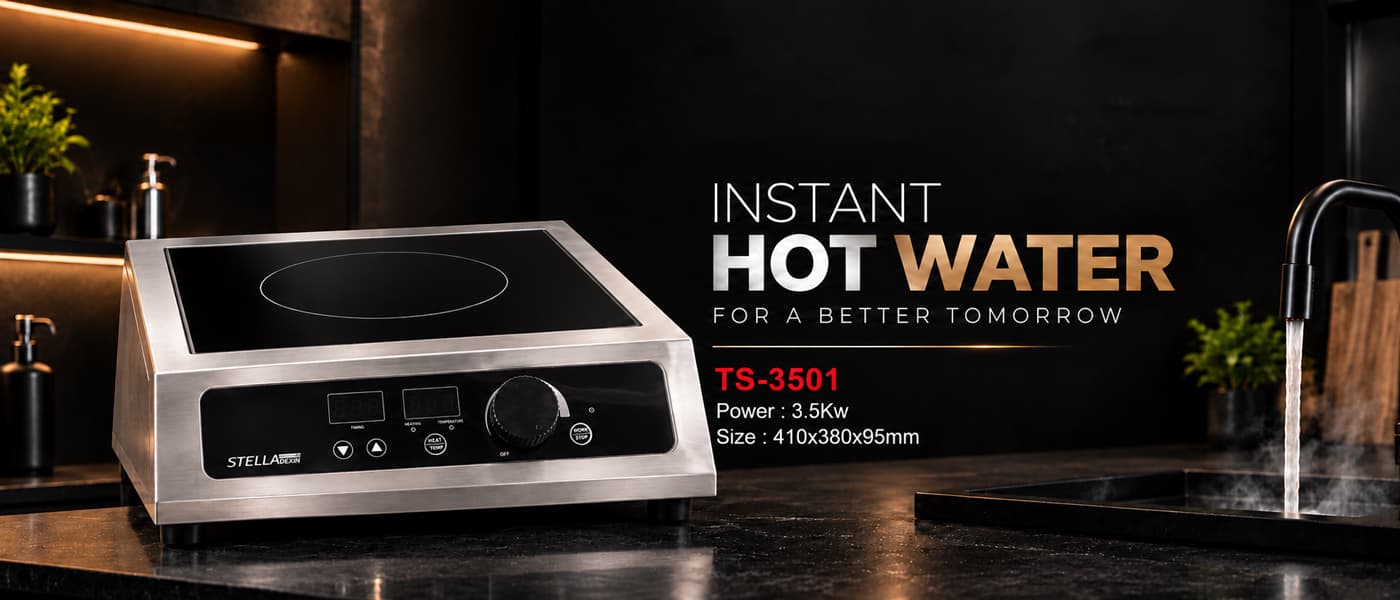
Perché l'induzione
Induzione o gas: l'arte moderna della cucina.
L'induzione riscalda il recipiente quasi istantaneamente invece di affidarsi alla conduzione termica di un bruciatore. Il risultato: ebollizione più rapida, temperatura più stabile e molta meno energia sprecata.
Tre cose accadono insieme.
Una bobina, non una fiamma
Sotto la superficie in vetro si trova una bobina di filo di rame. Il passaggio di corrente genera un campo magnetico che si alterna rapidamente.
La pentola diventa la resistenza
Quel campo induce una corrente nel fondo di qualsiasi pentola ferrosa appoggiata sopra, e la pentola stessa diventa la fonte di calore.
Nient'altro si scalda
Poiché il calore si genera dentro la pentola, ben poco si disperde nell'aria circostante: la superficie resta relativamente fredda.
Rispetto al gas e all'elettrico tradizionale.
Confronto generale per una postazione di cottura professionale. I valori reali variano in base a pentolame, carico e alimentazione.
| Criterio | Gas / elettrico | Induzione |
|---|---|---|
| Tempo di ebollizione | Riferimento | Fino al 50 % più rapido |
| Trasferimento di calore | Conduzione termica | Induzione magnetica diretta |
| Energia dispersa nell'aria | Rilevante | Minima |
| Risposta al comando | Ritardata | Quasi immediata |
| Pulizia | Griglie e bruciatori | Un'unica superficie in vetro sigillata |
Scoprite la gamma che la sfrutta.
Sfoglia i prodottiDomande frequenti.
Is induction actually cheaper to run than gas?
Induction puts the heat into the pan itself instead of heating the air around it, so very little energy is lost to the kitchen. It also boils water up to 50% faster than gas or conventional electric, which shortens the time a burner is drawing power at all.
Will induction work with the pans we already have?
Only with pans that have a magnetic base. The test takes a second: if a magnet sticks firmly to the underside, the pan will work. Cast iron and magnetic stainless steel are fine; aluminium, copper, glass and clay are not.
Is induction safer on a busy line?
There is no flame and no exposed element. The heat is generated inside the cookware, so the glass top stays comparatively cool and the surrounding air does not get loaded with waste heat — which makes a noticeable difference to working conditions over a long service.
Does induction need special electrical work?
It depends on the rating. Most table-top and buffet units run on a standard 220~240V single-phase supply. The 8 kW and 12 kW floor-standing ranges need a 440V three-phase supply, so the connection should be planned with an electrician before installation.
How is induction cleaned compared with gas?
There are no grates or burner heads to lift out — the top is a single sealed glass surface, so it wipes down flat at the end of service.